How much down payment for a house in Japan?
Paying a down payment of about 10% helps lower your home loan interest in Japan and covers initial buying costs. Even with interest rate changes, current conditions still offer great rates against rising rent and inflation.
Do you need a down payment to buy a house in Japan?
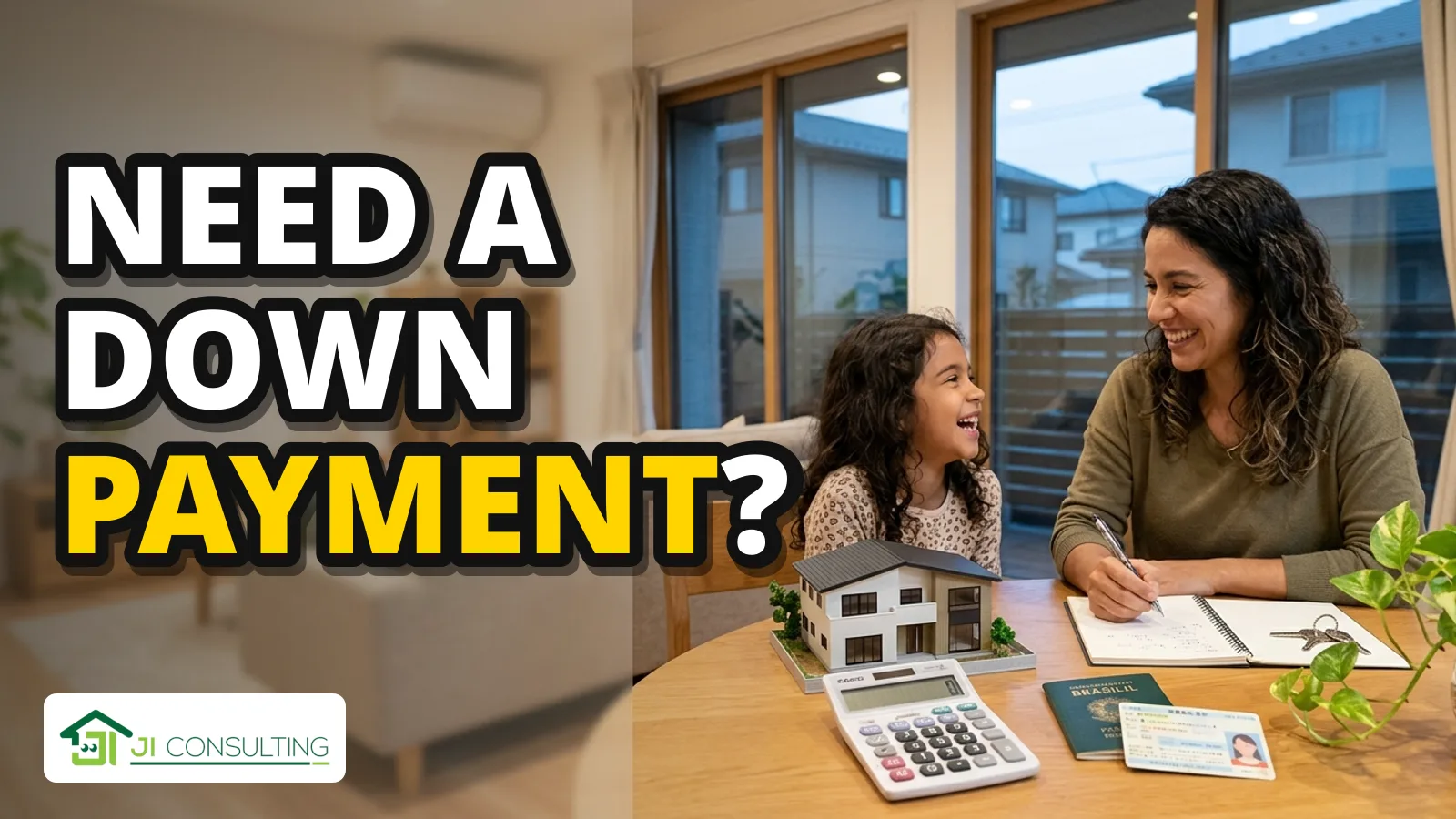
Many people who dream of owning a home in Japan ask if they must save money for a down payment. The short answer is that while you can borrow 100% of the cost in some cases, paying a down payment brings important benefits for your money, especially in the current economy of interest rates and inflation.
Foreign residents in Japan — such as factory workers or self-employed people — often think a lack of a large starting fund stops them from buying. However, giving up your dream for this reason may not be the best path. Let us understand how own capital (*jiko shikin* – personal funds) and home loans work together.
Why is it good to pay a down payment for a home loan?
With the trend of rising interest rates, putting down a payment helps decrease the total loan amount (*karikae* – loan refinancing or borrowing) and improves the conditions offered by banks. When using programs like *Flat 35* (a long-term fixed interest rate loan), keeping the borrowed amount below 90% of the total property price usually secures better interest rates.
Also, there are specific benefits that can reduce rates even more, such as:
- Shorter loan terms: borrowing for 20 years or less usually reduces the applied interest rate a lot.
- Discounts for families with children: *Flat 35* offers interest reduction programs for those raising kids.
Remember also that the deposit (*teitsukekin* – initial holding deposit) paid at first to hold the property can be included in the bank loan later, though it is best to have savings for the first steps.
How much personal funds should you prepare?
The practical advice is to try to save about 10% of the property value as personal funds. This money is not only to lower the house price, but also to cover initial expenses (*shohiyō* – closing costs and fees).
When buying a property in Japan, extra costs — like real estate agency fees, registration, taxes, and bank fees — add up to an average of 8% to 10% of the total property price. Having this percentage saved avoids money stress when you sign the contract.
What is the current real estate market like?
Many renters who live in rented apartments or public housing (*danchi* – affordable public apartment complexes) notice that as income becomes stable or inflation goes up, living costs rise. With the growth of the foreign population and rising prices in big areas like Tokyo and Nagoya, rents and house prices continue to go up.
Buying a home in a time of economic change can be a way to secure stability for your family and escape constant rent increases. Even if interest rates seem to move, the interest rate in Japan is still very low compared to other countries.
Take the first step with confidence
Buying your own home in Japan needs planning, but it is not only for a few people. If you want to understand how much you can borrow, what your visa (*zairyū shikaku* – residence status) effect is, and how to prepare your money, talk to people who understand the immigrant reality.
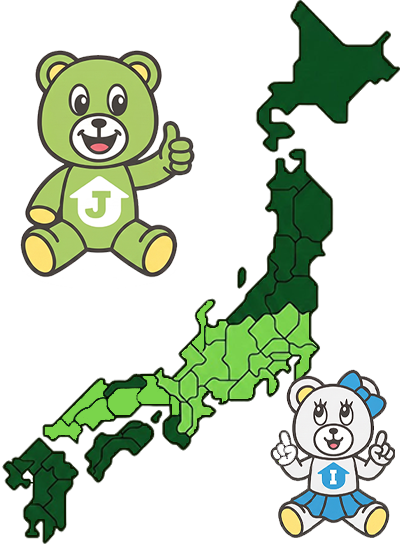
We serve AICHI-KEN, SHIZUOKA-KEN, MIE-KEN, GIFU-KEN, SHIGA-KEN, KYOTO, OSAKA, FUKUI-KEN, ISHIKAWA-KEN, TOYAMA-KEN, NAGANO-KEN, YAMANASHI-KEN, KANAGAWA-KEN, TOKYO, SAITAMA-KEN, CHIBA-KEN, IBARAKI-KEN, GUNMA-KEN, TOCHIGI-KEN.
Contact the Ji Consulting team via LINE or WhatsApp to ask your questions about home loans. We offer support in English (LINE or WhatsApp).
Still have questions? We have answers.
Do I need a down payment to buy a house in Japan through Ji Consulting?
The short answer is no, because in some cases it is possible to finance 100% of the property value. However, having your own capital brings important financial advantages and improves your bank loan conditions.
What are the benefits of making a down payment when buying a home?
A down payment helps reduce the total loan amount and improves the terms offered by banks. Under the Flat 35 system, for example, keeping the financed amount below 90% of the total secures more advantageous interest rates.